The hidden loss between farm and market
Growing a good crop is only half the job. Fresh vegetables, especially leafy greens and ripe tomatoes, are highly perishable, and in Nairobi's warm weather they can wilt, bruise, or rot within a day or two if handled badly. Farmers call this post-harvest loss, and it quietly eats into income and food supplies. Every kilogram you save from spoilage is a kilogram you do not have to regrow, and an extra bundle you can sell or eat.
The good news is that most of these losses can be reduced with simple habits that cost very little.
Harvest at the right time and in the right way
- Harvest in the cool morning when plants are full of moisture and heat is low, or in the late afternoon if you must.
- Use clean, sharp tools such as a knife or scissors rather than tearing leaves, since torn tissue rots faster.
- Pick at the right stage. Leafy vegetables should be young and tender, while tomatoes for market are best picked at the breaker or early pink stage so they survive transport.
- Avoid harvesting wet plants after heavy rain or watering, as wet produce spoils faster.
Keep produce out of the sun
Heat is the biggest enemy of freshly harvested vegetables. As soon as you cut them, move them into the shade. Cover harvested greens with a damp cloth or wet sack, and never leave them in direct sun, in a hot room, or in a closed vehicle. Even half an hour in the sun can cause noticeable wilting and shorten shelf life.
Handle gently and keep things clean
Bruises and cuts open the door to rot. Place produce carefully into containers rather than throwing it. Where possible, use clean crates or baskets instead of sacks that can crush the contents, and avoid overfilling. Wash hands and tools, rinse harvested produce with clean water if needed, and discard damaged or diseased pieces so they do not spread rot to healthy ones. Clean handling also protects customers from foodborne illness.
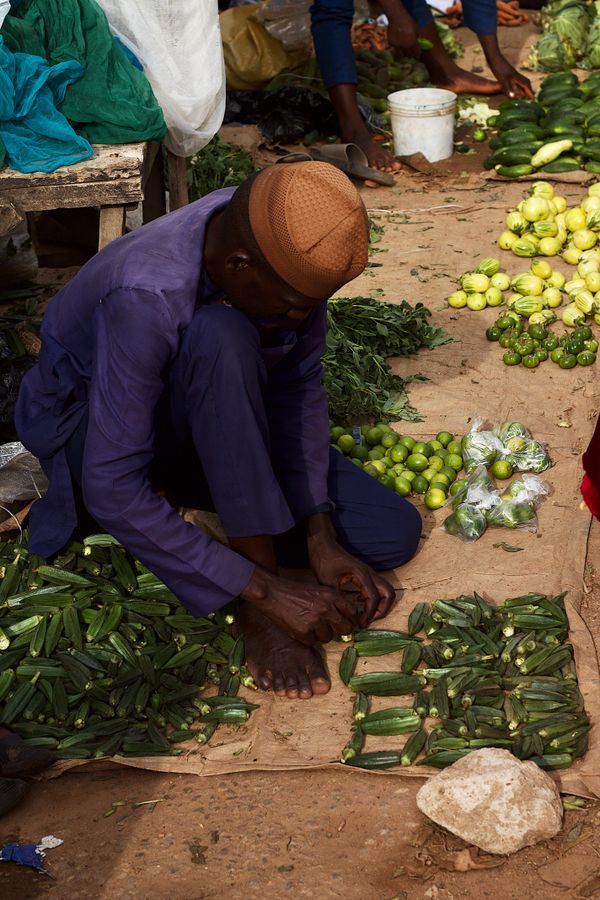
Sort and grade before you sell
Separate produce by size, ripeness, and quality. Buyers often pay better for uniform, clean bundles, and sorting lets you sell your best produce first and use slightly damaged items at home. Our article on how members price and sell produce on market day shows how presentation affects price.
Low-cost cooling and storage
You do not need a refrigerator to keep vegetables fresher. Several low-cost methods work well for small producers:
- Evaporative coolers: a double-walled box or pot-in-pot cooler, with damp sand or charcoal between the walls, keeps contents cooler as water evaporates. Keep it in a shaded, airy place and rewet the filling regularly.
- Damp cloth covers: loosely covering greens with a clean, wet cloth slows wilting.
- Shaded storage: store produce in a cool, well-ventilated corner, off the ground and away from sunlight.
Tomatoes generally keep better at room temperature in the shade than in a cold fridge, which can damage their flavour and texture. Leafy greens last longer when kept cool and slightly moist.
Preserve the surplus
When you have more than you can sell in a day or two, turn the surplus into something that lasts. Solar drying works for tomatoes, leafy vegetables, and herbs, and our guide to solar drying explains how to do it safely without electricity. Processing and packaging can also raise the value of what you grow, as we discuss in our article on value addition from farm to market.
Plan transport and timing
Harvest as close to the time of sale as you can, and move quickly. Pack produce so it does not shift or crush in transit, keep it covered and shaded on boda-bodas and matatus, and try to reach the market early, before the heat builds. Matching how much you harvest to how much you can realistically sell that day is one of the simplest ways to avoid waste.
Record what you lose
Keep a simple note of how much you harvest, how much sells, and how much is lost or spoiled. Over a few weeks, patterns appear: perhaps a certain crop spoils fastest, or a particular day of the week brings more leftovers. Those insights help you decide what to plant, how much to harvest, and where to improve. Our article on farm record keeping shows easy ways to start.
Key takeaways
- Harvest in the cool morning, use clean tools, and keep produce in the shade right away.
- Handle gently, sort and grade, and discard damaged pieces to prevent rot spreading.
- Use damp cloths, shaded storage, or evaporative coolers to extend freshness without electricity.
- Dry or process surplus produce, and track losses to improve each season.
Frequently asked questions
What is the best time of day to harvest vegetables?
Early morning, when temperatures are low and plants are full of moisture, gives the longest shelf life. Late afternoon is the next best option.
Should I store tomatoes in the fridge?
Generally no. Cold storage can harm texture and flavour. Keep tomatoes in a cool, shaded, ventilated place, and sell or use them while they are still firm.
How can I keep leafy greens fresh without electricity?
Harvest early, move them into shade straight away, cover them with a damp cloth, and keep them in a cool, ventilated spot or an evaporative cooler until you sell them.